Anne McIntyre has been in clinical practice working as a medical herbalist for over 40 years, having also trained as a remedial masseuse, aromatherapist, homeopath and counsellor. Anne runs her busy practice from Artemis House in the Cotswolds and for over 30 years she has incorporated Ayurvedic philosophy and medicine into her clinical practice, producing a unique integrated approach to the care of patients and prescription of herbs.
Anne is the author of many books on herbal medicine and Ayurveda including Healing with Flowers, The Complete Woman’s Herbal, Healing Drinks, Herbal Medicine for Children: Western and Ayurvedic Perspectives, The Complete Herbal Tutor, The Ayurveda Bible and Dispensing with Tradition: A Guide to using Indian and Western Herbs the Ayurvedic Way.
Anne’s home at Artemis House in the rural Cotswolds is the site of a beautiful spiral herb garden which she uses for tours and teaching – and which has been featured on BBC’s Gardener’s World! Throughout this website there are many pictures of the medicinal plants she grows there. Alongside her busy practice she lectures widely on herbal medicine and Ayurveda in the UK, Europe and America and runs in person courses from Artemis House, as well as conducting regular herb walks of her garden and the countryside around her home.
Anne is a Fellow of the National Institute of Medical Herbalists, a Member of the College of Practitioners of Phytotherapy, and a Member of the Ayurvedic Professionals Association.
Clinics

Anne holds clinics every week she is in the country, treating patients with her personal blend of Western Herbal Medicine and Ayurveda. Click here for more info…
Shop

Buy Anne’s books and ebooks from our online shop, along with hand-made teas and creams from herbs grown in Anne’s garden. Click here for more info…
Courses

Enhance your knowledge of herbal medicine and Ayurveda with online courses, annual apprenticeships, day courses and workshops. Click here for more info…
Latest News
- Rtucharya – seasonal adaptations
 The New Year often inspires us to make changes to our daily lives, sometimes with challenging resolutions and promises to… Read more: Rtucharya – seasonal adaptations
 - Garden Volunteers for 2026
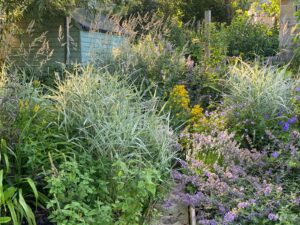 The garden at Artemis House is enormously important to my clinic, patients and students – and to me! It is… Read more: Garden Volunteers for 2026
 - My Favourite Kitchen Spices
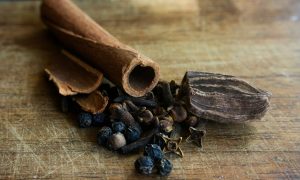 As the seasons shift and the air begins to cool, I find myself turning again and again to a handful… Read more: My Favourite Kitchen Spices
 - Calm in the Chaos – Strategies for Enhancing Mental and Emotional Resilience
 An immersive day of learning, movement, mindfulness and reconnection with Zaira and Anne McIntyre in the Cotswolds Saturday September 13th… Read more: Calm in the Chaos – Strategies for Enhancing Mental and Emotional Resilience
 - Burdock – Arctium lappa
 Burdock is a handsome biennial plant with large rhubarb-like leaves, found growing wild in waste places and on roadsides. It… Read more: Burdock – Arctium lappa
 - Dandelion – Taraxacum officinale
 This familiar wildflower is a member of the Asteracea/Compositeae family. With its cheerful yellow flower and remarkable resilience, dandelion has… Read more: Dandelion – Taraxacum officinale
Instagram Latest
Error: No feed with the ID 2 found.
Please go to the Instagram Feed settings page to create a feed.